Theoretical Nuclear Physicist & Computational Modeler
Bridging the gap between complex many-body physics theory and robust, high-performance software implementation.
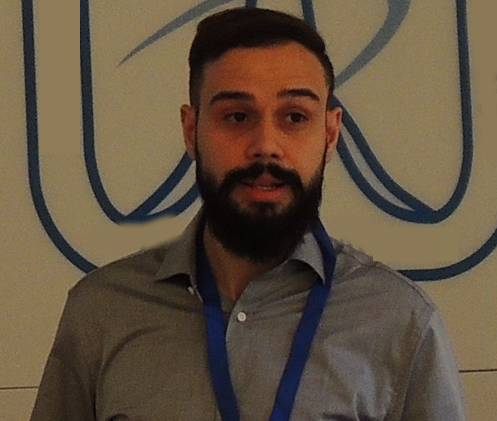
Oskar Huttunen Postdoctoral Fellow
University of York, United Kingdom
Postdoctoral Researcher
JYFLTRAP / IGISOL Experimental Group
University of Jyväskylä, Finland (2024)
Doctoral Researcher
Theoretical Nuclear Physics Group
University of Jyväskylä, Finland (2020 — 2024)
Academic Foundation & Distinction
Dr. Ramalho's scientific journey began at the University of Brasília, Brazil, where he developed a profound dedication to theoretical physics. Admission to the M.Sc. program involved a rigorous selection process to secure one of a limited number of institutional CNPq (National Council for Scientific and Technological Development) master's fellowships allocated from a national pool.
He achieved first place in this entrance ranking, securing full fellowship backing. During his master's studies, he specialized in theoretical nuclear physics, specifically investigating toy models of variable decay constants (λ) as an exploration beyond the conventional assumption of a strictly constant decay parameter.
He subsequently joined the University of Jyväskylä in Finland for his doctoral studies, fully funded by the University of Jyväskylä Graduate School. In April 2024, he successfully defended his Ph.D. dissertation in Theoretical Nuclear Physics, focusing on high-precision computations for beta decay and neutrino mass.
His doctoral research was awarded a Pass with Distinction, an honor reserved for elite dissertations unanimously ranked in the top 10% of graduates by both external pre-reviewers and the defense opponent.
Postdoctoral Research & Global Impact
Following his doctoral defense, he was awarded the highly competitive Oskar Huttunen Fellowship, securing Finnish international funding for independent postdoctoral research at the University of York in the United Kingdom. His active research program confronts fundamental challenges in rare-event physics, focusing on the weak axial-vector coupling (gA) quenching and the precise derivation of forbidden non-unique beta spectral shapes.
A defining achievement of Dr. Ramalho's career is the direct integration of his theoretical beta-decay models into worldwide experimental benchmarks. His nuclear shell model computations for background isotopes like 214Pb have been officially adopted as ground-truth background standards by the PandaX-4T dark matter collaboration (with findings currently under review in Nature), while corresponding background implementations for XENONnT are currently planned.
His theoretical computations maintain a global footprint through partnerships with leading research facilities worldwide, including:
- South Korea: The gA-EXPERT collaboration, investigating the effective value of the weak axial-vector coupling constant (gA).
- Italy: The INFN (Istituto Nazionale di Fisica Nucleare) collaboration, analyzing forbidden beta decays and rare-event physics.
- China: The PandaX dark matter collaboration, establishing ground-truth background radiation standards.
- Spain: The Gamma and Neutron Spectroscopy research group at the Institute of Corpuscular Physics (IFIC CSIC/UV), co-authoring pivotal studies on the 92Rb total beta-electron spectrum and nuclear decay heat.
- Finland: The IGISOL / JYFL accelerator laboratory at the University of Jyväskylä, integrating theoretical calculations directly into experimental trapping campaigns.
- Romania: The CIFRA (International Centre for Advanced Training and Research in Physics) collaboration, advancing interdisciplinary physics training and research.
- United Kingdom: The Computing Nuclei research group at the University of York, headed by Professor Jacek Dobaczewski.
High-Performance Computing, AI & Systems Engineering
Dr. Ramalho approaches theoretical physics through the lens of robust systems engineering. To execute massive many-body nuclear shell-model calculations, he utilized KSHELL (an advanced OpenMP + MPI parallel code). This enabled the deployment of large-scale M-scheme dimension diagonalizations across the CSC Mahti supercomputer, where the computational work was at the scale of approximately 10 million HPC CPU core-hours.
Beyond supercomputing scale, with over 12 years of Python experience and practical C++ capability, he regularly builds custom tools and designs automated pipelines to programmatically ingest and process experimental nuclear data from IAEA databases.
Complementing his theoretical research is a machine learning capability honed across diverse applications. Examples include deep neural networks to predict nuclear quadrupole moments (E2), specialized U-Net architectures for medical imaging CT segmentation, pipelines for synthetic data generation, and genetic algorithms for weight optimization.
Interested in collaborating?
Discuss a computational modeling partnership or scientific advisory project.